

Understanding Impacted Tooth Pain Relief Options

An impacted tooth occurs when a tooth fails to fully erupt through the gum line because of lack of space, abnormal angle, or delayed eruption, and this condition commonly causes pain, swelling, and infection risk. This article explains why impacted teeth hurt, offers evidence-based home remedies for temporary relief, and outlines when and how definitive dental care resolves the underlying problem. Readers will learn to recognize types and symptoms of impaction, use safe short-term measures like saltwater rinses and approved over-the-counter analgesics, and understand professional options from diagnostic X-rays to extractions and IV sedation. We also map recovery expectations and emergency care pathways for severe cases, and note practical resources available through local providers. Start here to get clear, clinically relevant guidance for impacted tooth pain relief and to decide when to seek timely professional assessment.
What Is an Impacted Tooth and What Causes the Pain?
An impacted tooth is a tooth that is blocked from fully emerging into the mouth by bone, gum, or adjacent teeth, and its failure to erupt disrupts normal oral anatomy leading to localized pressure and inflammation. The mechanism of pain includes direct pressure on adjacent teeth and bone, bacterial overgrowth around partially erupted crowns causing pericoronal inflammation, and nerve irritation from swelling; understanding these mechanisms clarifies why temporary measures may relieve symptoms but not cure the condition. Clinically, wisdom teeth (third molars) are the most commonly impacted teeth because they erupt late and often encounter insufficient space. Recognizing the anatomical and infectious drivers of pain helps prioritize next steps, which we explore in the following subsection on types and symptoms.
What Are the Types and Symptoms of Impacted Wisdom Teeth?
Impacted wisdom teeth present in several anatomical patterns—vertical, mesial (tilted forward), horizontal (lying on their side), and distoangular (tilted backward)—and each pattern produces characteristic signs. Symptoms commonly include localized gum swelling, sharp or aching jaw pain, difficulty opening the mouth (trismus), tenderness when chewing, and intermittent pain that flares with infection. Partially erupted teeth often create a flap of gum tissue (pericoronal tissue) that traps food and bacteria, increasing the risk of pericoronitis and persistent discomfort. Understanding the type of impaction helps clinicians choose between conservative monitoring and extraction, which we explain further when discussing causes of pain and potential complications.
Research further supports that the specific type of impaction can significantly influence post-operative discomfort and recovery.
Impacted Tooth Types & Post-Surgery Pain
Postoperative pain, swelling and trismus were evaluated. Distoangular impaction was significantly associated with higher VAS score on day 1 and 2. Distoangular and horizontal impaction are associated with a higher degree of swelling and reduced mouth opening on postoperative review days. Vertical impaction was associated with the least degree of facial swelling and best mouth opening.
Effect of age, impaction types and operative time on inflammatory tissue reactions following lower third molar surgery, WL Adeyemo, 2011
How Does Tooth Impaction Cause Pain and Complications?
Tooth impaction causes pain through a combination of mechanical pressure, soft-tissue inflammation, and infection, with pericoronitis—an infection of the tissue overlying a partially erupted tooth—being a frequent trigger of acute pain. Pressure from an impacted crown can damage adjacent tooth roots or enamel, creating secondary decay on neighboring teeth, while trapped debris and bacteria can form an abscess or even a cyst in rare cases. Left untreated, a chronic infection can enlarge, cause spreading cellulitis, or undermine bone support for nearby teeth, escalating treatment complexity. Early diagnosis limits these complications, so the next section outlines safe temporary relief steps to manage symptoms while arranging definitive care.
Which Home Remedies Provide Temporary Relief for Impacted Tooth Pain?
Temporary home remedies can reduce inflammation and control pain for short periods but do not treat the cause of impaction; they are useful as bridging measures until clinical evaluation. The most evidence-supported approaches focus on reducing bacterial load and swelling, plus using approved analgesics to manage pain; these measures can ease symptoms and make eating and sleeping more tolerable. Safety is a priority: avoid inserting unapproved substances deep into the gum pocket, do not use heat on acute infections, and follow label directions for over-the-counter medicines. After practical home measures, persistent or worsening pain warrants professional assessment to prevent progression, which is why seeking a dental evaluation is the next recommended step.
For patients seeking local evaluation and definitive care, Bespoke Dental in Lutz, FL offers diagnostic exams and treatment for impacted and wisdom teeth, including extraction and comfort options; a clinical assessment determines whether home remedies remain appropriate or if extraction is recommended. Bespoke Dental’s team includes a board-certified oral and maxillofacial surgeon and licensed dentist who collaborate on individualized treatment plans. This local referral note is intended to help readers bridge temporary relief with timely professional care when needed.
How Do Saltwater Rinses and Cold Compresses Help?
Saltwater rinses and cold compresses work by reducing bacterial counts in the oral cavity and constricting blood vessels to limit swelling, respectively, and both are simple, low-risk first-line measures. To prepare a safe saltwater rinse, dissolve approximately a half teaspoon of salt in a cup of warm water, gently swish for 30 seconds, and spit; repeat several times per day after meals to dislodge debris and soothe inflamed tissue. Apply a cold compress to the cheek in 15-minute intervals during the first 24–48 hours to control swelling, being careful to protect skin with a cloth and to avoid prolonged exposure that may cause tissue chill. These steps typically offer measurable symptom relief within hours to days, but persistent infection signs require clinician intervention.
- Saltwater rinse instructions help reduce bacterial load and soothe tissue.
- Cold compresses decrease inflammation and numb superficial pain.
- Use both techniques intermittently and discontinue if symptoms worsen.
When used correctly, these simple measures often make patients comfortable enough to arrange a dental appointment, and the next subsection explains appropriate over-the-counter and natural analgesic options to complement rinses and compresses.
What Over-the-Counter Medications and Natural Remedies Are Effective?
Over-the-counter analgesics such as nonsteroidal anti-inflammatory drugs (ibuprofen) and acetaminophen reduce pain and inflammation and are commonly recommended for short-term relief; always follow product labeling and consider personal medical history. Topical agents like benzocaine provide transient surface numbing but should be used sparingly and not placed deep into pockets or on large open wounds; natural remedies such as dilute clove oil applied to a cotton swab can deliver local analgesic effects but require caution to avoid mucosal irritation. These remedies are adjuncts that control symptoms rather than remove infection or resolve impaction; if pain persists despite appropriate OTC use, a clinical exam and likely imaging are warranted. The next section outlines clinical red flags that indicate the need to see a dentist promptly.
The effectiveness of these nonprescription options and home remedies for temporary toothache relief is widely recognized in dental literature.
Home Remedies & OTC for Toothache Pain Relief
The use of nonprescription medicines and home remedies for toothache pain relief has been well documented.
Toothache pain: Behavioral impact and self‐care strategies, 2009
When Should You See a Dentist for Impacted Tooth Pain?
You should seek professional evaluation when symptoms suggest infection, progressive damage, or systemic involvement, because impacted teeth can rapidly shift from localized discomfort to complications requiring urgent care. Key triggers to schedule an urgent visit include worsening pain despite home measures, increasing swelling, fever, difficulty swallowing or breathing, and signs of spreading infection such as swollen lymph nodes. Even in the absence of acute infection, persistent intermittent pain or recurrent pericoronitis warrants radiographic assessment to guide definitive treatment planning. The following subsections list specific infection signs and outline complications that can arise without timely intervention.
What Are the Signs of Infection and Severe Symptoms?
Infection around an impacted tooth commonly presents with localized pus, increased gum redness, persistent throbbing pain, fever, and tender, swollen lymph nodes; systemic symptoms like fever or malaise signal more advanced spread. Severe symptoms that require immediate attention include difficulty breathing or swallowing, rapidly expanding facial swelling, high fever, or trismus that limits mouth opening—these signs suggest possible airway compromise or deep-space infection. If you notice any of these red flags, seek emergency dental or medical care right away rather than relying on home remedies. Recognizing these urgent signs is essential to prevent escalation, and the next subsection details complications that emerge when treatment is delayed.
- Pus draining from the gum indicates active localized infection.
- Fever and swollen lymph nodes suggest systemic involvement.
- Difficulty breathing or swallowing is an emergency requiring immediate care.
Timely recognition of these signs allows clinicians to prioritize interventions that stabilize the patient and remove the infection source.
What Complications Can Arise Without Treatment?
Untreated impacted teeth can lead to recurrent pericoronitis, abscess formation, destruction of adjacent tooth structure, and in some cases, development of odontogenic cysts that erode bone and complicate surgery. Chronic infection can also compromise adjacent teeth through root resorption or caries due to trapped debris, creating broader restorative needs beyond extraction. Rarely, untreated spread can progress to deep neck space infections that require hospitalization; earlier clinical intervention significantly reduces these risks. Understanding these potential sequelae emphasizes why extraction or other definitive management is often recommended over prolonged conservative care, which leads into a discussion of professional treatment options available locally.
What Professional Treatment Options Does Bespoke Dental Offer in Lutz, FL?
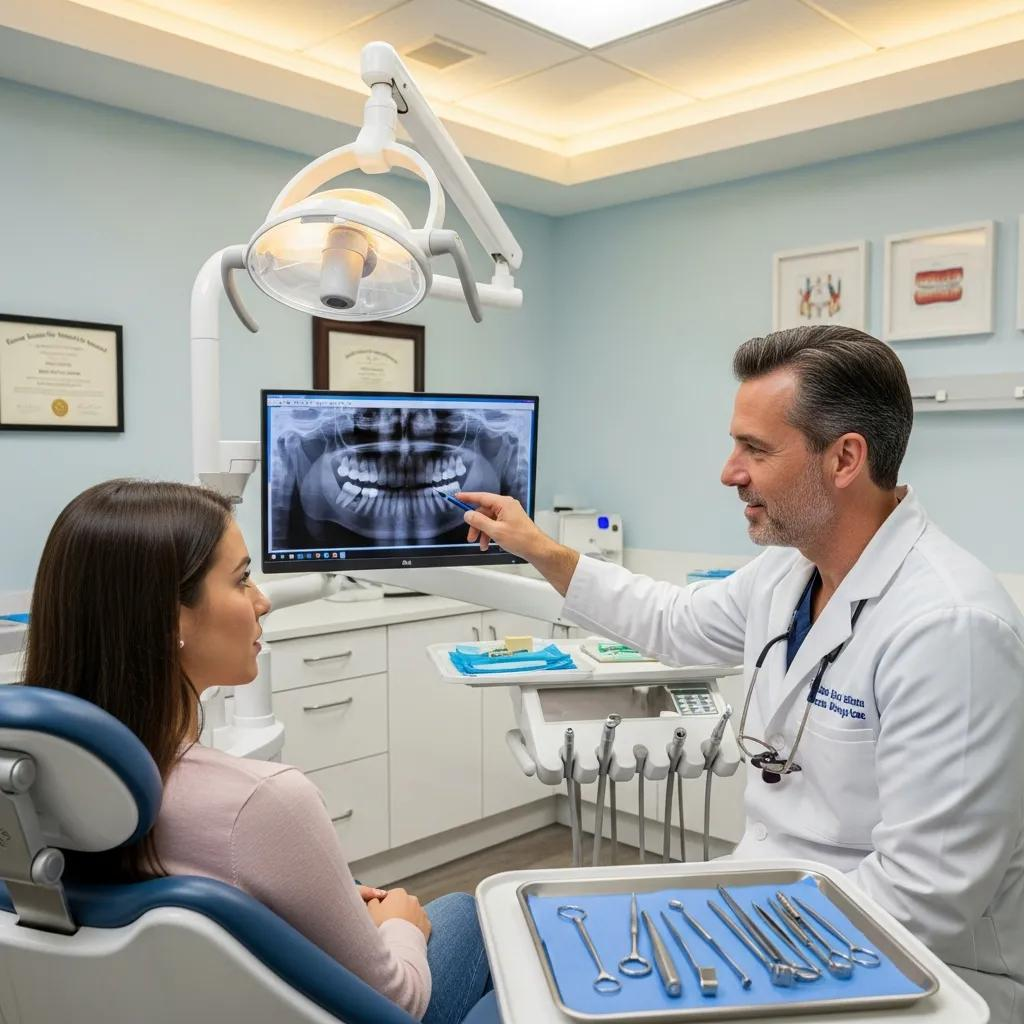
Professional treatment begins with a focused clinical exam and radiographic imaging to determine the impaction type, proximity to nerves, and optimal removal strategy; Bespoke Dental provides diagnostic X-rays and individualized treatment planning to guide care. Options range from simple extractions for fully erupted or easily accessible teeth to surgical extractions for impacted or bone-covered crowns, with IV sedation available to enhance patient comfort during more complex procedures. Antibiotics are used judiciously when infection is present or systemic signs appear, always paired with definitive drainage or extraction rather than as a sole long-term solution.
How Is Impacted Tooth Extraction Performed?
Impacted tooth extraction typically follows preoperative imaging, local anesthesia or IV sedation as indicated, careful removal of overlying bone if needed, tooth sectioning when necessary, and closure of the surgical site with sutures if appropriate. The goal is to remove the tooth while minimizing trauma to adjacent structures; clinicians continuously monitor comfort and vitals when sedation is used to ensure safety. Immediate post-op measures often include gauze packing for bleeding control, pain management instructions, and a short observation period before discharge; patients should arrange transport home if sedated. Knowing this sequence helps set realistic expectations and reduces anxiety about the procedure, which we contrast next with simple versus surgical extraction differences.
What Are the Differences Between Simple and Surgical Extractions?
Simple extractions involve loosening a tooth with elevators and forceps under local anesthesia when the crown is visible and accessible, whereas surgical extractions require incisions, possible bone removal, and sectioning of the tooth when the crown is buried or impacted. Surgical cases generally involve longer procedure times, more postoperative swelling, and a slightly longer recovery window; however, surgical approaches enable removal of teeth that cannot be managed conservatively. The choice between simple and surgical extraction depends on imaging findings and clinician assessment of impaction complexity; selecting the appropriate method reduces complication risks and optimizes healing. Understanding these distinctions leads naturally into how IV sedation can improve patient comfort during surgical interventions.
How Does IV Sedation Enhance Patient Comfort During Procedures?
IV sedation provides moderate to deep sedation levels that reduce anxiety, blunt memory of the procedure, and improve tolerance for longer or more invasive surgery, while local anesthesia ensures the area remains pain-free during the operation. Candidates for IV sedation include patients with high procedural anxiety, those undergoing complex surgical extractions, or individuals having multiple teeth removed in one session; a board-certified oral and maxillofacial surgeon provides additional assurance of procedural expertise and monitoring. Sedation requires preoperative planning, monitoring during the procedure, and post-op transport arrangements, but it dramatically improves many patients' procedural experience and cooperation. With this comfort option addressed, the next subsection clarifies when antibiotics are indicated as part of infection management.
Beyond traditional local anesthesia and IV sedation, advanced techniques like single tooth anesthesia are also being explored for their efficacy in localized pain control during wisdom tooth extraction.
Single Tooth Anesthesia for Impacted Wisdom Tooth Extraction
Single tooth anesthesia via intra-ligamentary injections has long been used to provide localized pain control with minimal discomfort while avoiding undesirable effects like lip numbness, mainly in pediatric population with definite success. In this study, we aimed to assess the efficacy of single tooth anesthesia (STA) via intra-ligamentary injections using WAND®STA in the surgical removal of impacted third molar.
Efficacy and reliability of Single Tooth Anesthesia (STA) for surgical removal of impacted wisdom teeth: a comparative study, K Ponvel, 2024
When Are Antibiotics Prescribed for Impacted Tooth Infections?
Antibiotics are indicated when there is clinical evidence of spreading infection, systemic involvement (fever, lymphadenopathy), or when drainage and extraction need short-term stabilization prior to definitive care. Antibiotics aim to reduce bacterial burden and systemic symptoms but do not remove the nidus of infection created by an impacted tooth; extraction or drainage remains the definitive intervention in infected cases. Clinicians use antibiotics as an adjunct to procedural treatment and monitor clinical response closely, scheduling timely follow-up to ensure resolution. Recognizing the adjunctive role of antibiotics clarifies why timely surgical management is usually necessary, and the next major section explains practical expectations for preparation, intraoperative experience, and recovery.
- Antibiotics support but do not substitute for definitive removal of infected tissue.
- Indications include systemic signs or rapidly spreading infection.
- Follow-up assessment ensures infection resolution and definitive care.
These principles underscore the integrated clinical approach to treating impacted tooth infections at the diagnostic and treatment level.
ServiceAttributeValueDiagnostic Exam/X-rayPurposeDetermine impaction type and plan extractionSimple ExtractionTypical procedureLocal anesthesia; forceps removalSurgical ExtractionTypical procedureIncision, bone removal, sectioning as neededIV SedationBenefitAnxiety control and comfort for complex cases
What Should Patients Expect During Extraction and Recovery?
Preparing for extraction and understanding the recovery timeline reduces anxiety and supports better outcomes; patients should expect clear pre-op instructions, monitored intraoperative care, and a structured home regimen for the first week. Preoperative planning includes medication review, fasting instructions when sedation is planned, and arranging transportation; clinicians will explain what to bring and how to prepare to ensure safety. The immediate postoperative period focuses on bleeding control, pain and swelling management, and clear criteria for when to contact the dental team. The next subsections provide targeted checklists for pre-op preparation, a stepwise outline of the procedure itself, and practical recovery tips.
How to Prepare for Impacted Tooth Extraction?
- Notify your clinician of all medications and medical conditions.
- Arrange transport if receiving IV sedation.
- Follow fasting instructions to ensure safe sedation.
These items help protect patient safety and improve the procedural experience.
What Happens During the Extraction Procedure?
During extraction you will be positioned comfortably, given local anesthesia and IV sedation if indicated, and monitored throughout the procedure while the clinician performs tooth removal using techniques appropriate to the impaction. For surgical extractions, the clinician may make a small incision, remove obstructing bone, and section the tooth to facilitate safe removal while protecting adjacent structures. Monitoring continues until sedation effects diminish, and discharge criteria typically include stable vital signs and the presence of a responsible escort for sedated patients. Understanding this timeline helps patients anticipate sensations and recovery benchmarks, leading into practical home care measures.
What Are the Post-Extraction Care and Recovery Tips?
Post-extraction care emphasizes bleeding control, pain management, infection prevention, and gradual return to normal activity: bite gently on gauze to form a clot, rest for 24–48 hours, and avoid strenuous activity that raises blood pressure and bleeding risk. Pain and swelling peak around 24–48 hours and respond to prescribed or over-the-counter analgesics and cold compresses; maintain a soft diet, avoid smoking, and keep oral hygiene gentle around the surgical site to support healing. If you notice increased bleeding, persistent fever, or worsening pain after initial improvement, contact your dental provider promptly for evaluation. These aftercare steps reduce complications and support a predictable recovery, and the following emergency section explains when immediate care is required and what financing options exist for urgent services.
PhasePatient PrepCommon Side EffectsApprox Recovery TimelineBeforeMedication review, fasting if sedated, transport arrangedAnxiety, fasting discomfortDay of procedure preparationDuringLocal anesthesia/IV sedation, monitoringDrowsiness (if sedated)Procedure length varies 20–90 minutesAfterRest, analgesics, cold compress, soft dietPain, swelling, minor bleeding1–2 weeks for soft tissue healing
For personalized pre-operative planning and to schedule a consultation tailored to your situation, Bespoke Dental in Lutz, FL evaluates each case with diagnostic imaging, discusses sedation options, and creates recovery plans suited to individual needs.
How Can Emergency Dental Care Help with Impacted Tooth Pain in Lutz, FL?
Emergency dental care stabilizes acute pain, controls infection, and protects airway or systemic function when impacted teeth cause severe symptoms, providing urgent antibiotics, drainage, or expedited extraction when needed. Emergency pathways prioritize airway assessment, management of spreading infection, and immediate pain control; clinicians triage based on severity and direct patients to urgent procedures when appropriate. For patients concerned about cost, several financing options may be available to support emergency treatment; the next subsections define emergency triggers and list financing resources commonly offered by practices to help patients access care.
When Is Emergency Dental Treatment Necessary?
Emergency treatment is necessary for rapidly increasing facial swelling, breathing or swallowing difficulty, uncontrolled bleeding, high fever, or signs of spreading infection that threaten airway or systemic health—these are immediate red flags requiring urgent intervention. If you encounter any of these triggers, seek emergency dental or medical evaluation without delay, and follow instructions to minimize movement and avoid actions that could worsen airway compromise. Emergency triage focuses on stabilization—administering analgesics, antibiotics, or performing urgent extraction or drainage to control the source of infection. Recognizing these emergency signs quickly enables clinicians to intervene effectively and reduce serious complications.
- Rapidly expanding facial swelling requires urgent attention.
- Difficulty breathing or swallowing indicates potential airway compromise.
- High fever with oral infection suggests systemic spread and needs immediate care.
Quick recognition of these symptoms shortens time to definitive treatment and improves outcomes.
What Financing Options Are Available for Emergency Dental Services?
Financial assistance can make emergency dental care more accessible; common programs and lenders that some practices accept include Sunbit, Cherry, Alpheon Credit, CareCredit, and LendingClub as options to help patients manage unexpected dental expenses. These financing options can provide payment flexibility for urgent procedures such as extractions, sedation, and imaging, but terms and availability vary by provider and patient qualification. Patients should contact their dental office to confirm which programs are currently accepted and to discuss application steps and approval timelines. Knowing financing possibilities in advance can reduce delay in seeking emergency care and supports timely treatment.
Emergency SymptomUrgent InterventionPotential Financing SupportRapid swelling or airway compromiseImmediate stabilization, possible urgent extractionSunbit, CareCredit (subject to availability)High fever with spreading infectionIV antibiotics, urgent drainage/extractionCherry, Alpheon Credit optionsUncontrolled bleedingHemostasis and urgent careLendingClub or in-office payment plans
- Recognize emergency signs early and do not delay seeking help.
- Use available financing options as needed to access urgent treatment.
- Contact your local provider to confirm current programs and next steps.
Prompt access to emergency dental services prevents serious complications and helps restore comfort and health.