

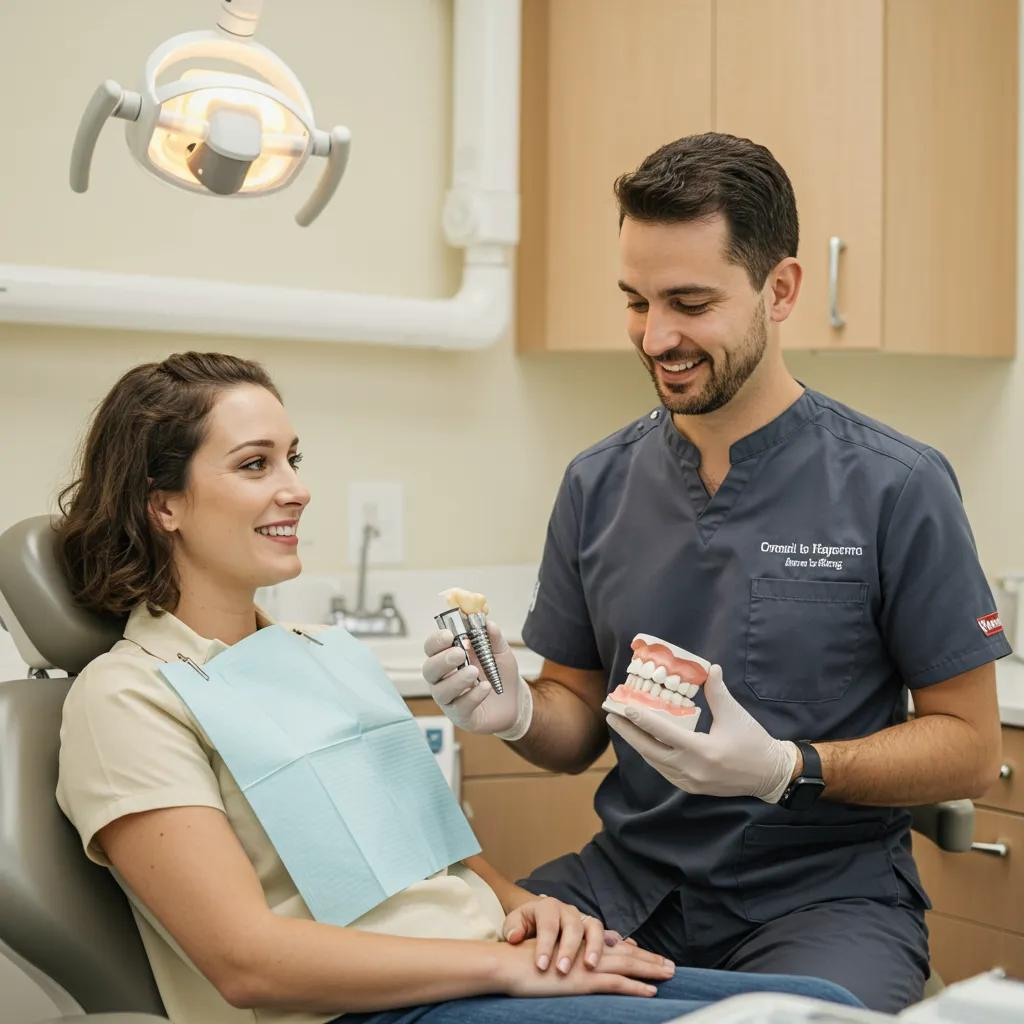
Dental Implants and Patient Satisfaction Unveiled
.png)
Dental implants are titanium fixtures placed into the jawbone that replace missing teeth and restore chewing, speech, and appearance; they improve quality of life by combining durable mechanics with natural-looking prosthetics. This article explains how implants work, why they score highly for patient satisfaction, what to expect during diagnosis and surgery, real local patient experiences, financing options in Lutz, FL, and how to maintain long-term success. Many people in Lutz, Land O’ Lakes, and Wesley Chapel worry about pain, cost, and longevity; understanding modern imaging, sedation choices, and aftercare reduces those concerns and supports confident decisions. Read on for clear comparisons of implant types, a practical procedural timeline, local satisfaction highlights, transparent cost guidance with financing partners, and an actionable aftercare checklist that helps implants last for years.
What Are Dental Implants and How Do They Improve Patient Satisfaction?
Dental implants are replacement tooth roots—typically a titanium fixture—that integrate with bone to support an abutment and prosthetic crown, restoring function, esthetics, and comfort. This integration, called osseointegration, provides a stable foundation for chewing and speech while preserving surrounding bone, which directly boosts patient satisfaction. Below are core benefits patients experience that explain high satisfaction rates after implant therapy.
Dental implants improve satisfaction through several clear outcomes:
- Stable Function: Implants restore chewing force and eliminate slipping common with removable dentures.
- Natural Aesthetics: Custom crowns mimic natural teeth, improving smile confidence and social comfort.
- Bone Preservation: Implants stimulate bone and reduce long-term resorption, preserving facial structure.
These benefits connect directly to implant selection and clinical planning, which we explore next in the implant type comparison.
What Is a Dental Implant and How Does It Replace Missing Teeth?
A dental implant replaces three functional parts: the fixture (root), the abutment (connector), and the prosthetic crown (visible tooth), creating a full restorative system.
The fixture is placed into bone and, through osseointegration, becomes a durable anchor that supports an abutment and a crown or bridge. Compared with removable dentures or fixed bridges, implants preserve adjacent teeth and provide independent support, which reduces long-term complications. Understanding these components helps patients appreciate why implants often outperform other dental restorations.
How Do Dental Implants Enhance Comfort and Confidence?
Implants provide a secure bite and eliminate the movement or sore spots that often accompany removable prostheses, improving daily comfort significantly. This mechanical stability also helps speech and chewing efficiency, allowing patients to eat a wider variety of foods and enjoy social situations with less self-consciousness.
Psychologically, a natural-looking restoration restores confidence and reduces self-limiting behaviors like avoiding smiling. Those functional and emotional gains together drive high patient satisfaction after implant treatment.
Factors Influencing Patient Satisfaction and Quality of Life with Dental Implants
Implant-Site Related and Patient-Based Factors with the Potential to Impact Patients' Satisfaction, Quality of Life Measures and Perceptions Toward Dental Implant Treatment. Implant Dent. 2017 Aug;29(4):231-239. doi: 10.1097/ID.0000000000000634. Epub 2017 Jun 20. PMID: 28635748.
Implant-site related and patient-based factors with the potential to impact patients' satisfaction, quality of life measures and perceptions toward dental implant treatment, GN Güncü, 2017
What Are the Success Rates and Longevity of Dental Implants?
Current research indicates implant survival rates commonly fall in the mid-90% range over the first 10–15 years, with careful planning and maintenance improving long-term outcomes. Success depends on factors such as bone quality, smoking status, systemic health, and regular hygiene; clinicians account for these variables during planning. Proper restoration materials and prosthetic design also influence longevity, as does timely management of complications like peri-implant inflammation. Realistic expectations and adherence to aftercare are key to achieving the best survival rates.
How Does the Dental Implant Procedure Ensure a Comfortable Patient Experience?
The implant process emphasizes diagnostics, planning, and comfort options—each step reduces uncertainty and improves the patient experience. Modern 3D imaging and intraoral scans allow precise placement planning that shortens surgery time and minimizes tissue trauma, directly lowering postoperative discomfort. Sedation and local anesthesia options further reduce anxiety and pain during procedures, and structured healing protocols support smoother recoveries.
In-clinic comfort measures include:
- Comprehensive diagnostics: Medical history review and CBCT imaging clarify anatomy and risks.
- Sedation options: Local anesthesia, oral sedatives, and IV sedation improve comfort for anxious patients.
- Minimally invasive techniques: Guided surgery and precise planning reduce soft-tissue disruption and recovery time.
These measures work together to make implant treatment predictable and tolerable while maintaining clinical safety.
Conscious Sedation for Dental Implants: Impact on Patient and Surgeon Satisfaction
Effect of conscious sedation use on anxiety reduction, and patient and surgeon satisfaction in dental implant surgeries: A systematic review and meta-analysis. Dent Med Probl. 2022;59(1):143–149. doi:10.17219/dmp/141868
Effect of conscious sedation use on anxiety reduction, and patient and surgeon satisfaction in dental implant surgeries: a systematic review and meta-analysis, R Pourabbas, 2022
What Happens During the Initial Consultation and 3D Imaging?
The initial consult covers medical history, oral exam, and 3D imaging to assess bone volume, nerve positions, and sinus anatomy—information that shapes a safe, personalized treatment plan. Imaging enables virtual placement and prosthetic planning so patients can see expected outcomes before surgery, reducing surprises. The consult also outlines timelines, potential need for bone grafting, and sedation options to align expectations. Clear communication at this stage builds confidence and contributes to higher satisfaction.
How Is IV Sedation Used to Reduce Anxiety and Pain?
IV sedation is a monitored option that helps patients remain relaxed and comfortable during surgical steps while allowing clinicians to maintain airway safety and responsiveness checks. Trained staff monitor vital signs and recovery until patients are stable; this supervision reassures patients and reduces perioperative memory of the procedure. IV sedation is especially helpful for those with dental anxiety or complex surgeries requiring longer operative time. Discussing sedation candidly during the consult ensures patient comfort and informed consent.
Intravenous Sedation in Dental Implantology: Patient and Operator Satisfaction
ObjectivesThe aim of this three-year study was to evaluate whether elective comprehensive dental implant procedures involving guided bone and soft tissue regeneration carried out under intravenous sedation (midazolam) would be influenced by patient self-reported pre-operative anxiety levels; age and gender; effect the level of sedation with respect to the amount of sedative administered and the time taken in the procedures; effect patient intra-operative cooperation, and post-operative levels of patient satisfaction; influence further acceptance of dental implant surgical procedures; effect intra-operative surgeon satisfaction and consequently his/her post-operative sense of achievement.
Intravenous sedation as an adjunct to advanced comprehensive dental implantology: the patient's perspective and operator satisfaction, 2015
What Are the Steps of Implant Placement and Healing?
Implant placement typically follows incision and osteotomy, implant insertion, and suturing, followed by a healing phase where bone integrates with the fixture over several months before final restoration. Patients usually receive a temporary prosthesis during healing when needed, and clinicians advise on activity, diet, and oral hygiene to protect the site. Pain is managed with prescribed or recommended over-the-counter options and cold/soft diet strategies to reduce swelling. Regular check-ins ensure the implant is integrating properly before the prosthetic phase.
What Do Patients Say? Real Dental Implant Reviews and Success Stories from Lutz, Land O’ Lakes, and Wesley Chapel
Local patients often highlight comfort, improved function, and renewed confidence after implant therapy, reflecting strong satisfaction trends in nearby communities. Common themes in reviews include relief from denture instability, faster recovery with modern imaging-guided techniques, and personalized attention from care teams. Aggregated sentiment typically centers on life-changing functional gains and aesthetic improvements that allow patients to eat, speak, and smile without worry. Patient narratives connect clinical choices—like precise planning and sedation options—to tangible emotional and functional outcomes.
Patients report these consistent benefits:
- Better chewing and food choices
- Improved speech clarity
- Greater willingness to smile and socialize
These reported outcomes align with the clinical advantages of implants and show how technology and personalized care translate into patient-perceived value. Bespoke Dental emphasizes a patient-centered approach—“Your Smile Your Way”—and combines experienced clinicians, advanced technology, and comfort measures such as IV sedation to support successful local implant journeys; readers may contact the practice for full testimonials and to discuss booking a consultation.
How Do Patient Experiences Reflect Satisfaction with Bespoke Dental?
Patient experiences often mirror the clinic’s emphasis on personalized planning, advanced imaging, and comfort-focused care, which together reduce surprises and support smoother recoveries. Local patients note clear communication about timelines and realistic expectations, which reduces anxiety and improves perceived outcomes. When clinicians align treatment plans with patient goals, the result is a stronger sense of trust and satisfaction. This alignment is central to patient-centered implant care.
What Are Common Benefits Reported by Implant Patients?
Commonly reported benefits include restored chewing ability, improved speech, reduced mouth soreness, and higher self-confidence—outcomes that directly affect daily life and social engagement. Patients also frequently note convenience versus removable prostheses, including fewer maintenance inconveniences and improved taste sensation. These practical and psychosocial improvements explain why many patients rate implants as a transformative treatment. The consistency of these reports supports implants as a reliable pathway to improved oral health-related quality of life.
How Do Testimonials Highlight Personalized Care and Advanced Technology?
Testimonials often call out precise planning with 3D imaging and attentive staff communication as the differences that made care feel tailored and safe. Technology like intraoral scanning and CBCT reduces chair time and surgical risk, while dedicated follow-up and clear aftercare instructions reinforce trust. When patients experience both technical excellence and compassionate service, reported satisfaction tends to be higher and more durable over time.
How Much Do Dental Implants Cost and What Financing Options Are Available in Lutz, FL?
Implant costs vary based on implant type, number of fixtures, need for bone grafting, and restorative materials; conservative single-tooth estimates often fall within typical industry ranges and increase with complexity. Key cost drivers include surgical complexity, laboratory prosthetic fees, and any preparatory procedures such as grafts or extractions. For many patients, financing and phased treatment plans make implants attainable without undue financial strain.
Common cost factors include:
- Number of implants and restorations
- Bone grafting or additional surgical needs
- Materials and laboratory prosthetic work
Bespoke Dental offers flexible financing through partners including Sunbit, Cherry, Alpheon Credit, CareCredit, and LendingClub to help patients spread payments; patients are encouraged to request a personalized estimate and payment scenario during consultation to understand monthly obligations clearly.
What Are Typical Dental Implant Costs and What Influences Pricing?
Typical implant cost estimates depend on scope: single-tooth implants cost less than multi-unit or full-arch restorations, while grafting and advanced prosthetics raise fees. Geographic market factors and lab material choices also affect prices, as do clinician expertise and the use of digital workflows. Patients should view published ranges as estimates and seek itemized treatment plans to compare options and make informed decisions.
Which Flexible Financing Plans Does Bespoke Dental Offer?
Bespoke Dental partners with several financing providers—Sunbit, Cherry, Alpheon Credit, CareCredit, and LendingClub—to offer structured monthly payment options that can reduce upfront burden. These partners enable different plan lengths, down payment possibilities, and estimated monthly payments depending on the treatment cost and patient eligibility. Discussing financing early in planning helps patients select phasing strategies that match their budgets and clinical goals.
How Can Patients Afford Dental Implants Without Financial Stress?
Practical strategies include phasing treatment over time, combining fewer immediate implants with staged restoration, and leveraging flexible monthly financing to smooth cash flow. Requesting an itemized treatment plan and exploring partner financing during the consult makes budgeting transparent. Patients can also discuss alternatives in materials or prosthetic sequencing with their clinician to prioritize critical functional and esthetic needs while managing cost.
How Can Patients Maintain Their Dental Implants for Long-Term Success and Satisfaction?
Consistent daily hygiene and regular professional maintenance prevent complications and preserve implant stability and surrounding bone over time. A routine that includes gentle brushing, interdental cleaning tools, and scheduled professional cleanings reduces plaque accumulation and peri-implantitis risk. Early recognition of warning signs and timely clinical follow-up are essential to protect long-term outcomes and patient satisfaction.
Follow this aftercare checklist after implant treatment:
- Daily oral hygiene: Brush twice and clean around implants with interdental brushes.
- Diet and activity: Follow short-term soft-diet guidance and avoid heavy exertion immediately post-op.
- Monitor for warning signs: Report persistent pain, swelling, or mobility to your clinician promptly.
Routine maintenance prevents complications and preserves bone.
What Are the Best Practices for Dental Implant Aftercare?
Best practices include maintaining meticulous oral hygiene with brushes and interdental cleaners, adhering to a soft diet in the immediate postoperative period, and keeping prescribed follow-up appointments for professional assessment. Avoiding tobacco and following medication guidance support healing. Clinician instructions on cleaning techniques and timelines should guide daily habits to protect the implant site during osseointegration.
How Does Proper Maintenance Prevent Complications and Bone Loss?
Effective plaque control minimizes inflammation around implants, reducing the risk of peri-implant mucositis and peri-implantitis that can lead to bone loss and implant failure. Professional cleanings remove biofilm in areas difficult to reach at home, and periodic radiographic checks monitor bone levels. Early intervention for mucosal changes or mobility preserves long-term implant stability and function.
When Should Patients Schedule Follow-Up Visits and Checkups?
Typical follow-up includes an immediate postoperative check within the first week, a prosthetic evaluation once healing allows restoration, a 3–6 month integration check, and regular annual maintenance visits thereafter. Each visit assesses healing, occlusion, prosthetic fit, and hygiene status to catch issues early. Establishing and keeping this cadence supports implant longevity and sustained patient satisfaction.
Frequently Asked Questions
What are the potential risks associated with dental implants?
While dental implants are generally safe, potential risks include infection at the implant site, nerve damage, and sinus issues, particularly with upper jaw implants. Other complications can arise from improper placement or inadequate bone density. Patients should discuss their medical history and any concerns with their dentist to ensure a thorough evaluation and minimize risks. Regular follow-ups and adherence to aftercare instructions can also help mitigate these risks and ensure successful outcomes.
How long does the dental implant procedure take from start to finish?
The dental implant process typically spans several months, beginning with the initial consultation and imaging, followed by the surgical placement of the implant. After the fixture is placed, a healing period of 3 to 6 months is necessary for osseointegration, where the bone fuses with the implant. Once healed, the abutment and crown are placed, completing the restoration. Each patient's timeline may vary based on individual healing rates and treatment complexity.
Can anyone get dental implants, or are there specific eligibility criteria?
Most adults are candidates for dental implants, but certain criteria must be met. Ideal candidates should have sufficient bone density to support the implant and be in good overall health. Conditions such as uncontrolled diabetes, smoking, or certain autoimmune diseases may affect eligibility. A thorough evaluation by a dental professional will determine if implants are suitable, and alternative options may be discussed if necessary.
What should I expect during the recovery period after implant surgery?
Post-surgery recovery typically involves some swelling, discomfort, and minor bleeding, which can be managed with prescribed pain relief and cold compresses. Patients are advised to follow a soft diet and avoid strenuous activities for a few days. Regular follow-up appointments will monitor healing progress. It's crucial to maintain oral hygiene and report any unusual symptoms, such as persistent pain or swelling, to the dentist promptly.
How do dental implants compare to other tooth replacement options?
Dental implants offer several advantages over traditional options like dentures and bridges. They provide a stable, long-lasting solution that mimics natural teeth, improving chewing and speech without the discomfort of removable prosthetics. Unlike bridges, implants do not require altering adjacent teeth. While they may have a higher upfront cost, their durability and low maintenance needs often make them a more cost-effective choice in the long run.
What lifestyle changes should I consider after getting dental implants?
After receiving dental implants, maintaining good oral hygiene is essential to ensure their longevity. Patients should brush and floss regularly, avoid tobacco use, and attend routine dental check-ups. Additionally, a balanced diet that supports oral health can enhance healing and implant stability. Being mindful of habits that could impact oral health, such as grinding teeth or consuming excessive sugary foods, is also advisable for long-term success.
Are there any dietary restrictions after dental implant surgery?
Following dental implant surgery, patients are generally advised to stick to a soft diet for the first few days to minimize discomfort and protect the surgical site. Foods like yogurt, mashed potatoes, and smoothies are recommended. As healing progresses, patients can gradually reintroduce harder foods. It's important to avoid sticky or hard items that could disrupt the healing process or damage the implant. Always follow your dentist's specific dietary recommendations for optimal recovery.
Conclusion
Dental implants offer a transformative solution for missing teeth, enhancing both function and aesthetics while significantly boosting patient satisfaction. By understanding the benefits, procedures, and aftercare associated with implants, individuals can make informed decisions that lead to long-term success. If you're considering dental implants, reach out to our team for personalized guidance and support tailored to your needs. Discover how our advanced technology and compassionate care can help you achieve the smile you've always wanted.